Our Lady of Guadalupe’s Method for Evangelization
In this edition of The Valley Catholic, the articles highlight how the arts serve our faith and liturgy. In this article, I wish to speak to a work of art, literally not made by human hands: the image and story of Our Lady of Guadalupe.
In this edition of The Valley Catholic, the articles highlight how the arts serve our faith and liturgy. In this article, I wish to speak to a work of art, literally not made by human hands: the image and story of Our Lady of Guadalupe.
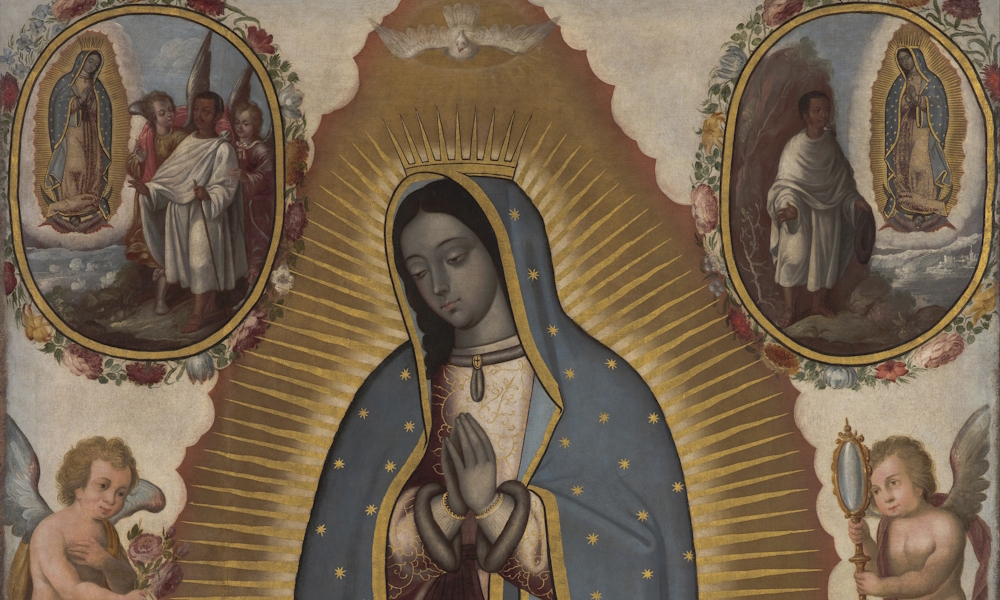
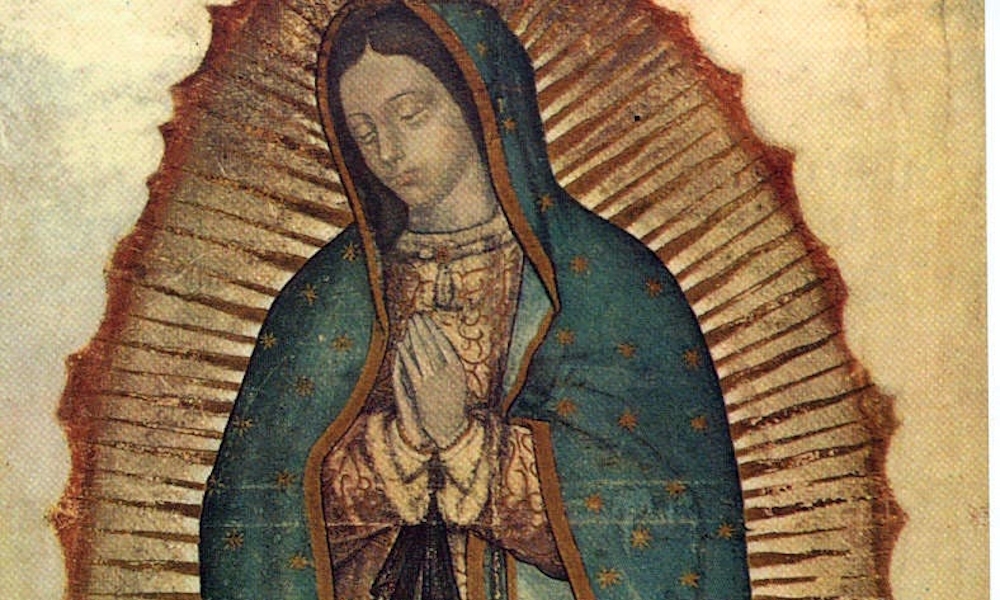
In Scripture God reveals himself as the Divine Artist, creating the world beautifully and intricately — and creating humanity in his own image and likeness! What a feat! As the psalmist says, “I praise you, because I am wonderfully made; wonderful are your works” (Ps 139:14)! In the image of Our Lady of Guadalupe, we can certainly speak of a miraculous painting, as scientists who have studied it have marveled at its composition and longevity, wondering how such a simple cloth (tilma) of a peasant could last 500 years. Below, however, we’ll explore not so much the science but the image’s deep meaning for human dignity and evangelization in our age.
Human Dignity and Participation in the Christian Mission
By choosing Saint Juan Diego on Tepeyac Hill in 1531 —a relatively recent convert to the Catholic faith (perhaps around 1524), a humble man with little social status — Mary highlights the dignity of all of humanity, regardless of social status. Not only does she acknowledge this dignity of the poor and those on the margins, but she shows us how it is borne out – encouraging Juan Diego to be a protagonist in favor of his fellow indigenous people and in favor of their salvation in Christ Jesus. God’s grace extends to all.
Juan is seen as an exemplar of Christian dignity and hope. He is sent to his fellow indigenous people to share the story of Mary’s apparitions and the message of hope, love, consolation – and salvation in Christ Jesus, her divine Son! This is our dignity as baptized Christians: we are chosen, loved, and sent.
A Mother’s Tender Words
Mary intercepted Saint Juan Diego on his way to the church one Saturday morning. She addressed Juan with motherly tenderness. “Juan Dieguito [my little Juan], the most tender of my children.” Mary uses the diminutive as a term of endearment and tenderness. The Nican Mopohua, documenting the dialogue between Mary and Juan, describes birds singing in the hills – emphasizing the pleasant, joyful, and hope-filled encounter between the Lady from heaven and the humble Juan from Cuauhtitlan.
We can only think of the idyllic nature of Eden, which Adam and Eve were able to enjoy before their fall from grace. God reveals himself not first by arguments, but by beauty, tenderness, and the harmony in nature — the art of creation. We also think of the profound peace, joy, and overwhelming glory of heaven to which we are all called, and from which Mary spoke to Juan Diego.
The Role of the Laity within the Church
Mary asked that a temple be built on the hillside where she appeared. Yet, she asked that Juan Diego go to the bishop to share this request. Mary thus acknowledges and respects the structure of the Church her Son left through the Apostles. She models respect for the Church’s hierarchy and their rightful role as teachers of the faith and shepherds of the Church.
Juan Diego was a layman, married to Maria Lucia. They were both baptized in about 1524. Juan became an evangelist and catechist to his fellow indigenous people, sharing with them the Christian faith and the story of Mary’s apparitions and her message of maternal care.
Where the friars in the New World had had limited success in bringing the indigenous people to the Christian faith 500 years ago, Mary was deeply successful, through the witness of Saint Juan Diego. She attracted millions to the Christian faith in relatively short order. Juan Diego, the saintly layman, was key in this evangelization!
A Christo-centric Image
The image itself “speaks.” The floral designs on Mary’s tunic were not merely aesthetic patterns, but were hieroglyphs representing mountains (in the case of the larger floral designs) or concepts for the indigenous people of the time. The large floral designs in this case were not just any mountain or hill, but specifically Tepeyac Hill, precisely where Mary appeared to Juan Diego, and where she wanted the temple to be built. The miraculous image of Mary thus became a codex for the indigenous people, giving credence to the story Juan himself recounted verbally with great conviction to his fellow indigenous.
Among the floral designs on Mary’s tunic, there is one small four-petalled flower on Mary‘s tunic, right at her belly. The indigenous people referred to it as the Nauhi Ollin. The Nauhi Ollin symbolized for the indigenous people plenitude and divine presence. Understanding that the Lady in the miraculous image was pregnant (indicated by the black ribbon around her waist), the indigenous people understood that her unborn child was divine and brought human life to fulfillment.
What Guadalupe Teaches us Today
As Mary introduced the indigenous people to Christ and “the true, living God,” she established a channel of communication through spoken and visual language that would allow them to understand, and eventually accept, the Christian message.
Thus, Mary appears as an indigenous woman, using indigenous hieroglyphics, speaking to Juan in Nahuatl, his native language, to facilitate the understanding of the Christian message. In these gestures, Mary acknowledges the dignity of the indigenous people and their culture, while calling for a purification of elements of the culture that were antithetical to Christianity, such as human sacrifice.
I wonder if Mary’s methodology of calling the indigenous people of the “new world” 500 years ago can be employed today here in Silicon Valley? Perhaps in acknowledging the values of our culture in Silicon Valley, such as the care for creation, the appreciation of natural beauty, concern for the poor, etc., we can create a space where Jesus Christ is seen with fresh eyes and an open heart.
Mary, Star of the New Evangelization, help us to bear the face of Christ in the Valley of Saint Clare.