Renewal in Worship
Understanding and Appreciating God’s Sacred and Redeeming Action In the Church’s Liturgy
Understanding and Appreciating God’s Sacred and Redeeming Action In the Church’s Liturgy
Dear Brothers and Sisters in Christ,
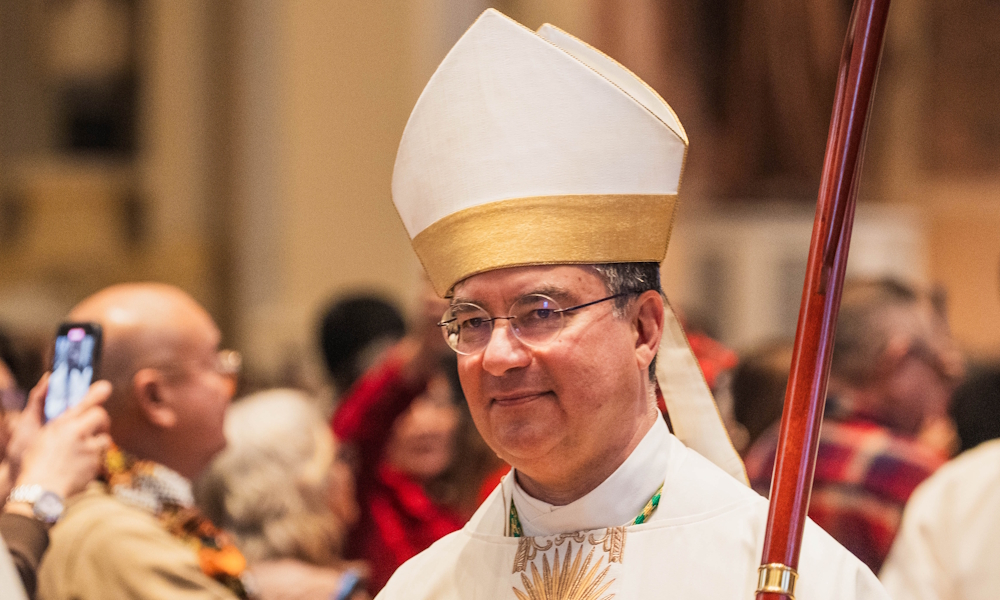
Worship is one of the six focus areas of our Pastoral Plan, Renewed in Christ, Together in Mission. Beginning in Lent this year, the Diocese of San José will embark on a journey of spiritual renewal in our communal worship. I invite you to open your hearts and minds to the catechesis in homilies, verbal announcements, written bulletin inserts and posts, and other formation opportunities, so that we might all appreciate more deeply the rich treasures of God’s love, presence, and salvific action that Jesus Christ left us in the Church’s liturgy, especially in the Eucharist.
Dear Brothers and Sisters in Christ,
Worship is one of the six focus areas of our Pastoral Plan, Renewed in Christ, Together in Mission. Beginning in Lent this year, the Diocese of San José will embark on a journey of spiritual renewal in our communal worship. I invite you to open your hearts and minds to the catechesis in homilies, verbal announcements, written bulletin inserts and posts, and other formation opportunities, so that we might all appreciate more deeply the rich treasures of God’s love, presence, and salvific action that Jesus Christ left us in the Church’s liturgy, especially in the Eucharist.
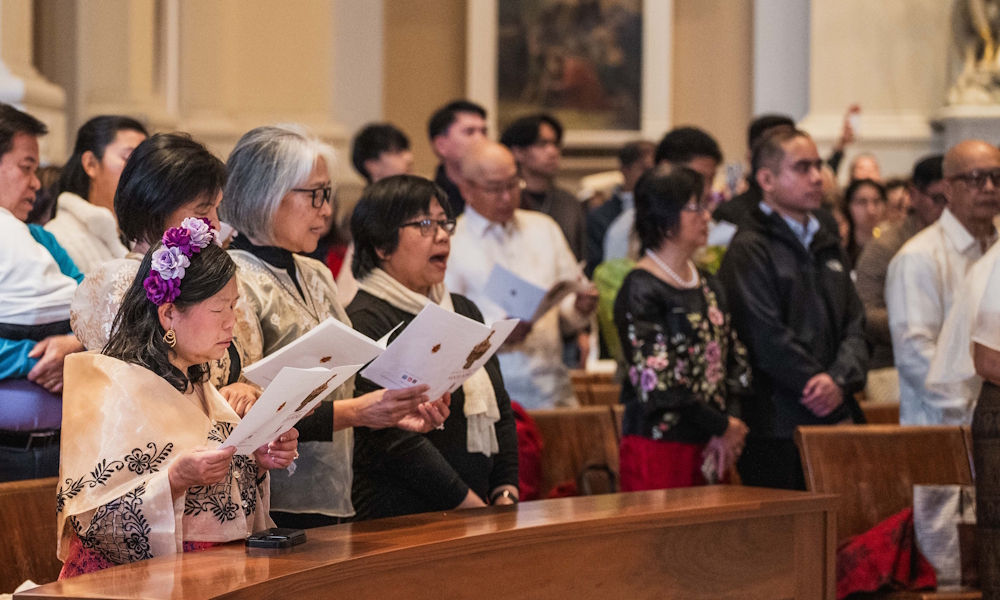
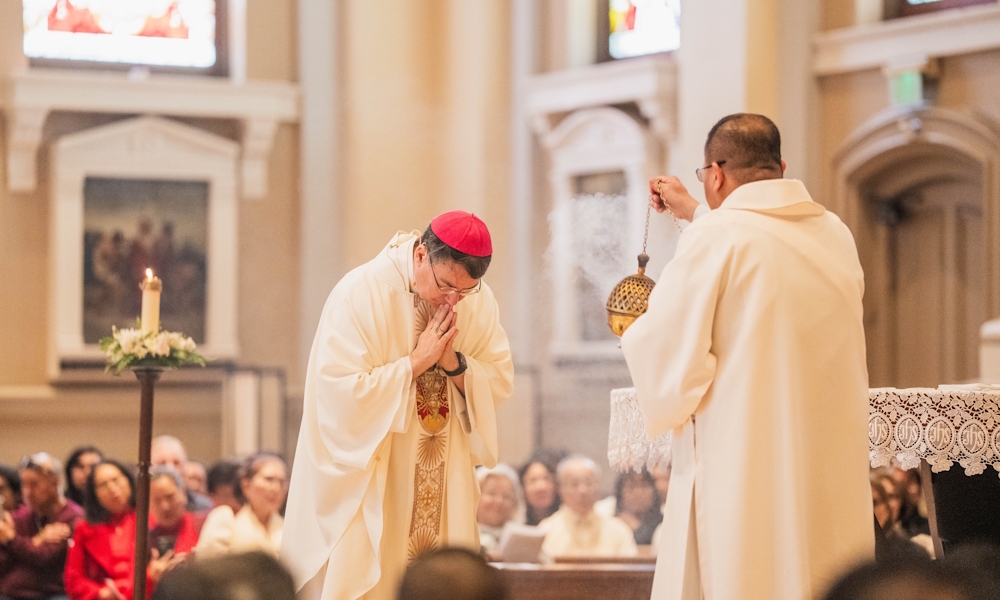
The liturgy is a privileged place and time to encounter God, to recall His loving, compassionate presence through history, and to marvel as well as celebrate His presence with us even now, especially when he convokes his Church to worship.
God, of course, does not limit his presence, love, and grace to community worship in liturgy. He is present to individuals, always calling us to friendship with him and to follow Him. While our attention to God and personal relationship with Him is important to acknowledge and foster, it is also as members of his greater body collectively, i.e. the Church, that we find our place and mission in the world (cf. 1 Cor. 12:12). Likewise, in worship, together with our fellow brothers and sisters of our Church community, we find our fullest and best expression as human beings created in God’s image and likeness.
Over the course of several months, our parishes, priests, deacons, and lay leaders will present various opportunities to deepen our understanding and appreciation for the depths and wonder of Jesus’ Paschal Mystery (his suffering, death, and resurrection), as celebrated in liturgy, that offers humanity communion with God and hope of eternal life.
I was recently reading a series of articles and presentations by the great 20th century theologian, Romano Guardini (1885-1968) on liturgical formation. He says the following:
“[the] Holy Spirit has imprinted his seal upon our souls and transformed our bodies into his temple; he knows our essence better than we ourselves know it. The forms of expression that he teaches us are deeply formative. We should grow into them, even if they do not correspond to our sentiments…” (Liturgy and Liturgical Formation, p. 72; emphasis mine).
Guardini emphasizes that liturgy is not only communal worship, but an ecclesial event – that is, one in which God is actor, convoking His people and inviting them into the mystery of His love and salvation. We might note that Guardini was deeply influential upon Pope Francis, and served as a mentor to Pope Benedict XVI (Joseph Ratzinger) in his early years.
The more we understand what is happening in the liturgy, the more we can appreciate it, and thus the more meaningfully we can participate in it. Pope Francis just a few years ago wrote an important document, Desiderio Desideravi, on the liturgy — particularly emphasizing the importance of liturgical formation. I agree deeply with Pope Francis’ sentiment.
One of the phrases used multiple times in the Vatican II document on the liturgy was “full, active, conscious participation.” The Church determined that it is critical that participants in liturgy be engaged in what is happening.
Unfortunately, “full, active, conscious participation” is often understood as doing lots of things, being physically (and of course, spiritually) active in liturgical ministries.
While liturgical ministries (such as lectors, altars servers, hospitality ministers, sacristans, and extraordinary ministers of Holy Communion) are terribly important in a beautiful and reverent liturgy, it is most critical that all participants in the liturgical assembly participate with a deep appreciation of the sacred mystery that God invites us to enter through the liturgy.
We can do this by preparing our hearts and minds before we come to Mass — reviewing the readings and reflecting on what we will bring to God in gratitude and petition — and while at Mass by being attentive to the words and actions of the Mass and responding and singing.
I thus invite us to open our hearts and minds as we embark on appreciating more deeply the sacred and redeeming mysteries we celebrate in the liturgy, particularly the Eucharist.
Yours,
Bishop Oscar Cantu