Revisiting Pope Francis’ Fratelli Tutti
Dear Brothers and Sisters in Christ,
Every now and then, I regret that time passes too quickly, and events, occasions, or people therefore fail to penetrate my consciousness and receive the proper time and attention for adequate appreciation. One such event was the publication of Pope Francis’ Fratelli Tutti (“Brothers All”). The encyclical was released in 2020, when we were at the height of the global pandemic, still without a vaccine. The scourge of the virus we thought would last a few weeks had stretched into several months. Winter was upon us, and we therefore anticipated further spread of Covid infections. Moreover, national elections were upon us. We were collectively preoccupied, and many of us didn’t pay sufficient attention to the release of Fratelli Tutti.
Dear Brothers and Sisters in Christ,
Every now and then, I regret that time passes too quickly, and events, occasions, or people therefore fail to penetrate my consciousness and receive the proper time and attention for adequate appreciation. One such event was the publication of Pope Francis’ Fratelli Tutti (“Brothers All”). The encyclical was released in 2020, when we were at the height of the global pandemic, still without a vaccine. The scourge of the virus we thought would last a few weeks had stretched into several months. Winter was upon us, and we therefore anticipated further spread of Covid infections. Moreover, national elections were upon us. We were collectively preoccupied, and many of us didn’t pay sufficient attention to the release of Fratelli Tutti.
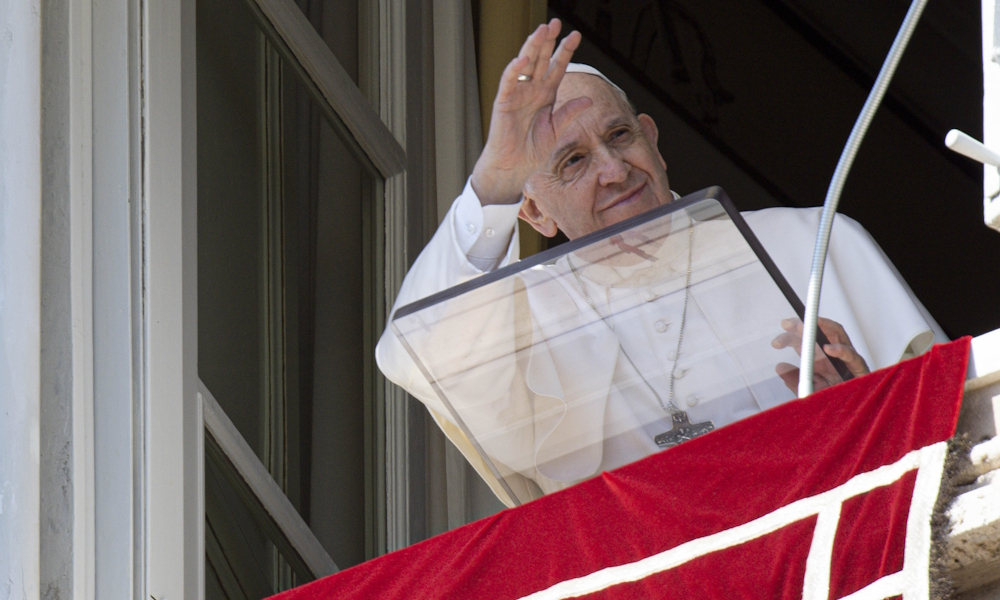
The encyclical letter by Pope Francis on fraternity and social friendship is a gem of a document that is more relevant than ever. I believe revisiting it may nourish our consciences, especially as we grow weary of wars, social polarization, and impasses in attempts to dialogue. In Fratelli Tutti, Francis called us to a better kind of politics in which the dignity of the human person and the common good are at the center.
Pope Francis reminded the world that the human race is also a human family, that we need one another, depend on one another, and should care for one another. As a universal pastor, he reminded us of Jesus’ parable of the Good Samaritan, in which the unexpected hero of the story is a sworn enemy, forcing us to rethink our alliances. He helped us to imagine – and yearn for – healthy societies, built on relationships of mutual respect and concern for the common good. He taught that authentic dialogue is necessary both for individual human flourishing and the flourishing of societies.
Pope Francis lamented that in a fast-paced world, focused on development and profits, we have unintentionally created a throw-away culture, which marginalizes the poor, the elderly, migrants, unborn children, and other vulnerable people. These are the very persons with whom Jesus identified (cf. Mt 25), and for whom he calls us to have special solicitude.
In his opening paragraphs, Pope Francis notes, “In today’s world, the sense of belonging to a single human family is fading, and the dream of working together for justice and peace seems an outdated utopia. What reigns instead is a cool, comfortable and globalized indifference” (FT 30). Pope Francis's call for a global examination of conscience remains quite timely. Have we grown indifferent to the suffering of those on the margins? The Holy Father’s reflection on the parable of the Good Samaritan moreover reminds us of the moral imperative to care for one another, most especially those on the margins of society. In that call, we are invited to ask ourselves whether there is some way we can engage with the work of social agencies, such as Catholic Charities locally or nationally, or Catholic Relief Services internationally, to reach suffering humanity with compassion and humanity.
With his typical colorful language, Pope Francis pointed out a certain self-deception that has taken place in this digital age. He notes that “we gorged ourselves on networking, and lost the taste of fraternity” (FT 33). We often place a premium on the quantitative and less on the qualitative element of relationships – especially in recent decades. Humanity cannot be lived in a superficial manner; human fulfillment requires friendship – true friendship, with a human touch, one that listens, cares, and spends time, and is not rushed off to more important engagements.
This invites us to ask, “Do we make time for friendship, for listening, for caring, particularly for the outcast?” Related to this matter, Pope Francis treats the topic of kindness, not a Pollyannish type of kindness–but one that is a fruit of the Holy Spirit (Gal 5:22) and brings not only a human touch to our experiences, but a divine touch. He says that “kindness frees us from the cruelty that at times infects human relationships” (FT 224).
Dialogue was a trait that, in many ways, defined Pope Francis: he practiced it and encouraged the world to do so. He noted that “some people attempt to flee from reality, taking refuge in their own little world; others react to it with destructive violence. Yet ‘between selfish indifference and violent protest there is always another possible option: that of dialogue’” (FT 199). Contrary to what we often witness in today’s public discourse, which many times devolves into a “feverish exchange of opinions” that merely end up resonating as “parallel monologues” (FT 200), true dialogue includes a “generous encounter with others, …honest pursuit of the whole truth, …service, …closeness to the underprivileged and the promotion of the common good” (FT 205).
While there are many other themes to be explored in this rich document, I conclude with Francis’ treatment of solidarity and service. “Solidarity,” he says, “finds its concrete expression in service” (FT 115). Solidarity begins when we allow ourselves to feel a oneness with suffering humanity. This desire for solidarity must lead to action. It is service that changes the world. Love changes the world, bringing a divine purpose to humanity. Do we use our gifts of time and talents to make the world a better place? Do we help in some way to alleviate someone else’s suffering through our time and efforts? Francis reminds us, “Service is never ideological, for we do not serve ideas, we serve people” (FT 115).
As we enter the holiday season, let us ponder some of the values that Pope Francis placed before us in Fratelli Tutti, so that we may become true neighbors to one another – indeed, true brothers and sisters of the one human family created by God.
Bishop Oscar Cantú