Our Magnificent Humanity
The Call to Encounter One Another
The Call to Encounter One Another
In an age increasingly shaped by artificial intelligence, perhaps the most important questions are the ones we ask about ourselves.
In an age increasingly shaped by artificial intelligence, perhaps the most important questions are the ones we ask about ourselves.
For Dr. Julie Rubio, the Shea-Huesman Professor of Christian Social Ethics at the Jesuit School of Theology of Santa Clara University (JST-SCU), Pope Leo XIV’s recent encyclical Magnifica Humanitas leads us to reflect on how we can become more generous, humble, and curious about the world; in short, on how to discover our magnificent humanity.
The key lies in encountering one another. Indeed, the mark of being human may be that, more than seeking answers, we search for each other, and ultimately, for God.
For Dr. Rubio, the renewed public interest in the Church’s tradition as a way to guide humanity in encountering one another in the AI revolution is a tremendous reason for hope. She said, “Our tradition is in the public’s view in a new way; that's exciting!”
Nourished by the Church’s Intellectual Tradition
Dr. Rubio has had a lifelong interest in theology. After college, during a few years of service at Mary House, a shelter for pregnant migrant women in Washington D.C., she discerned a call to study theology, marriage, and motherhood. Her experiences have anchored her work: “I decided to write my dissertation about family and Catholic social thought. That intersection of family relationships and social justice has been my focus ever since.”
Dr. Rubio described her life as a theologian: “I feel so blessed to be able to read and talk about theology every single day. And then here at JST-SCU, to be able to do that for ministry has formed me as a person of faith, as a professor and a theologian.”
Of the Church’s social teachings, she reflected, “This tradition is the wisest thing I know out there. Catholic social doctrine has been around for 135 years and has considered everything from changes in work brought about by the Industrial Revolution to climate change, changes in family life, and globalization. I think people see this long and deep tradition of ethical thinking and dialogue about society as a great resource.”
From Rome to Silicon Valley
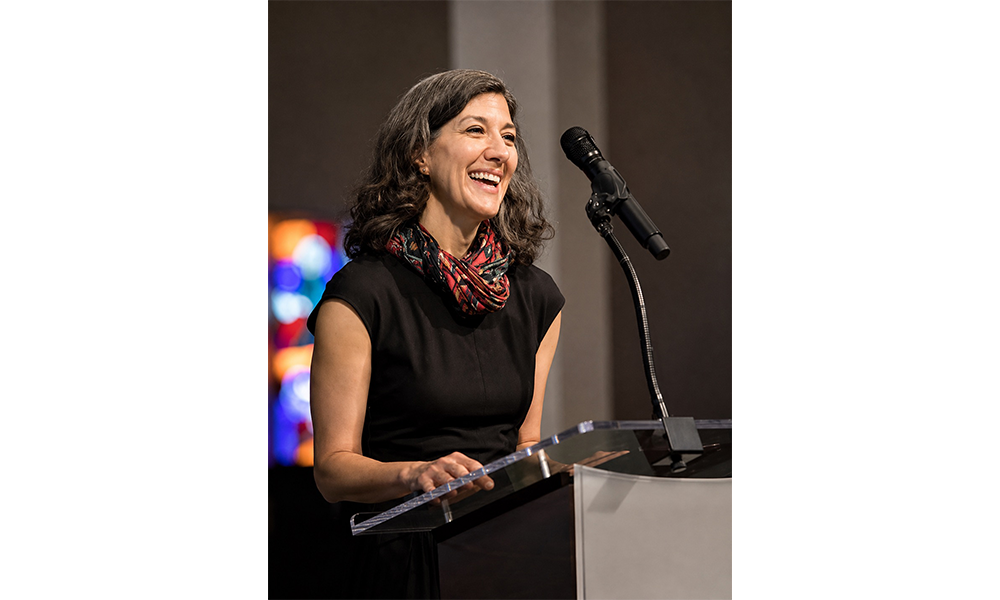
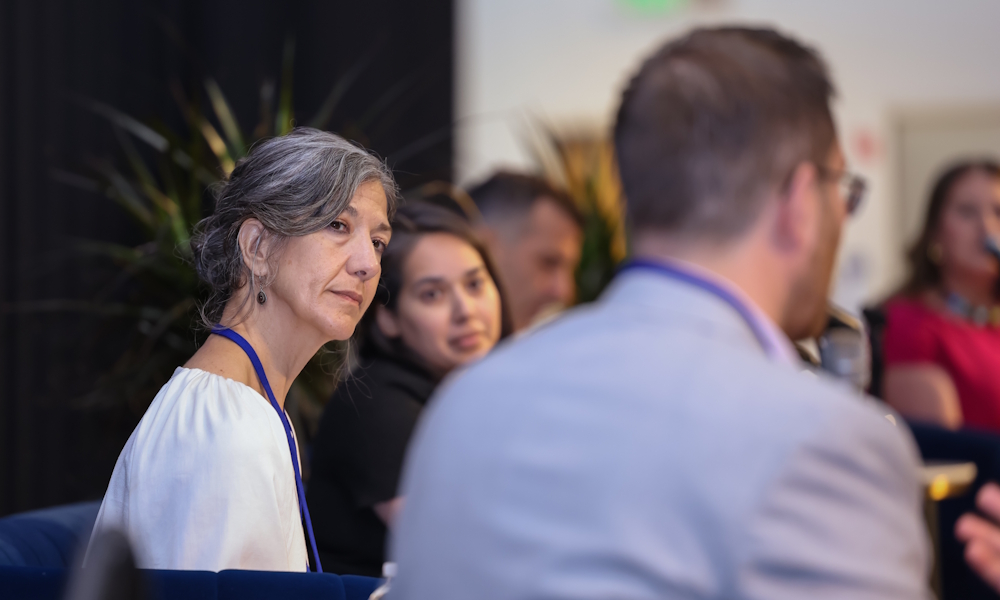
Following the release of Pope Leo’s encyclical Magnifica Humanitas, Dr. Rubio participated in the recent diocesan conference “Where Rome Meets Silicon Valley: Conversations on Human Dignity, Ethics, and AI” in June at Our Lady of Peace.
At the conference, Dr. Rubio was struck by how those working in the tech industry expressed an interest in the Catholic perspective. She reflected, “It seemed to me that they knew the potential of AI to reshape how we live and realized they needed to engage with a tradition that offered rich ethical thinking.”
In her presentation, she recounted a colleague describing what teaching is like now that students can easily use AI to generate their work: “That scholar shared, ‘When I’m grading papers now, because students are using AI, I cannot see them anymore. This means I cannot know them and that really saddens me.’”
Dr. Rubio’s takeaway from this story touches on the importance of encountering someone’s genuine voice and experiences: “To be human is to express ourselves and encounter others when they express themselves. We cannot lose that for the sake of efficiency.” This echoes Pope Leo XIV’s sentiments on the importance of preserving human faces and voices in this age.
Generosity, Humility, and Curiosity
Dr. Rubio recognizes that although AI has important uses, Catholics are invited to be particularly discerning. “We have to evaluate AI, not just by how efficient it could make us, or how productive, or successful, but by how it really shapes our flourishing. For Catholics, human flourishing is connected to encounter and living as relational beings.”
Dr. Rubio emphasized that discernment extends into ordinary moments of life. “What happens to our family relationships and friendships if we rely on AI to write texts, cards, or love letters for us? What happens to our interiority and our relationship with God if, instead of journaling or praying, we talk to a chatbot?” These are questions that human beings alone can wrestle with.
It is precisely that process of discerning together that can lead to encounter. “This is especially true when we can approach each other with generosity, humility, and curiosity. Those are the virtues that I always tell my students we are trying to cultivate,” she said.
Of Synodality and Genuine Encounter
About the link between encounter and the Church’s growing synodality, Dr. Rubio offered: “If synodality is about listening to each other and discerning the movements of the Holy Spirit, it requires acknowledging the human dignity of every person.” She added, “Magnifica Humanitas encourages this. The Church practices synodality when it brings people with different experiences and expertise to tables to dialogue.”
For the past two years, the Jesuit School of Theology of Santa Clara University has sponsored Together at the Table, an event that gives the public space to reflect on themes related to synodality.
Both times it has been held, prominent Vatican Cardinals have presented the keynote address to facilitate public discernment. Participants stay seated in table groups, perhaps with people they have never met before, with whom they reflect, listen, pray, and share.
The most recent invited speaker was Cardinal Timothy Radcliffe OP, who spoke on the link between synodality and friendship. Those who attended testified to what they heard and how it transformed their understanding of encountering their neighbor.
It is also notable that when Pope Leo presented his first encyclical, he did so alongside two cardinals, two lay women theologians, and an AI executive. “He was modeling synodality,” Dr. Rubio stressed. Her colleague, JST-SCU Professor Léocadie Lushombo, sat on Pope Leo’s panel at the encyclical unveiling in Rome. According to Dr. Rubio, “Dr. Lushombo said that being there and being really listened to was a powerful experience of synodality.”
Our Magnificent Humanity
In an age of artificial intelligence, theologian Dr. Julie Rubio emphasizes that what truly makes us human lies in the human-to-human connection that Pope Francis and now Pope Leo XIV frequently highlight. Authentically encountering others and discovering our own genuine humanity means building relationships by approaching the world with generosity, humility, and curiosity.
“All of Catholic moral thought really is connected to the idea that to be human is to be relational, in encountering God, and other people. This is what we broadly take away from the Genesis creation narratives,” Dr. Rubio stated.
As AI reshapes how we learn and communicate, the Catholic tradition, especially in its social teaching, offers a trustworthy framework for utilizing these technologies ethically and building a culture of encounter.
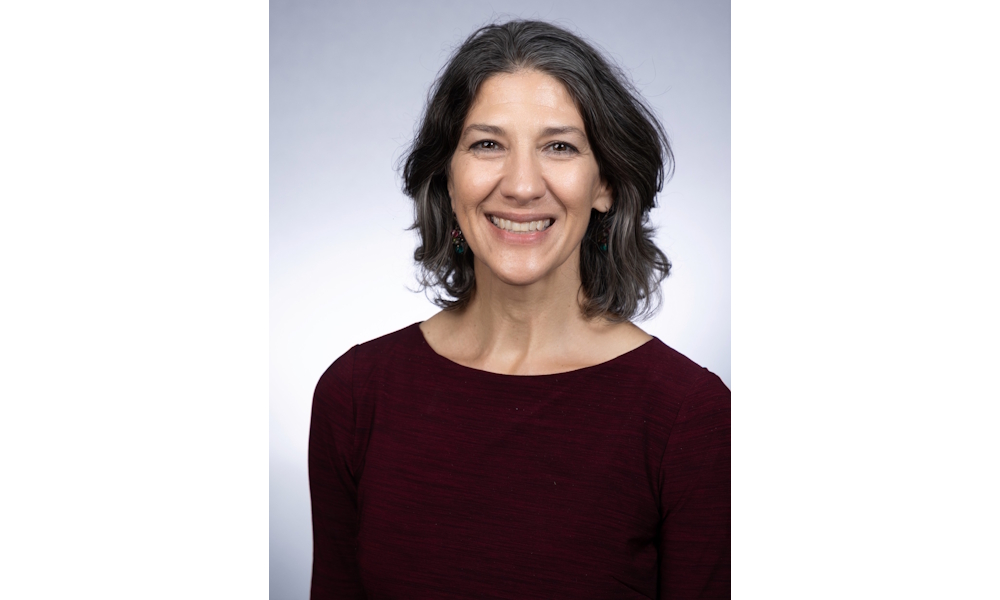
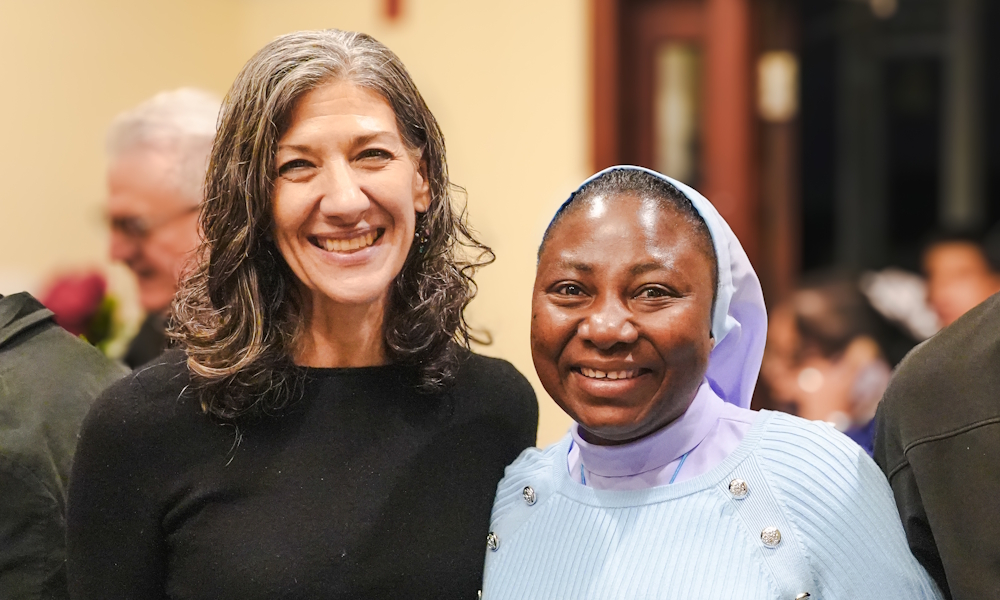
Julie Hanlon Rubio is a professor of Christian social ethics at the Jesuit School of Theology of Santa Clara University and the author of five books. She and her husband belong to Newman Hall Holy Spirit Parish in Berkeley. She loves yoga, hiking, and cooking for family and friends.