Christ Embodied
Four Stories from Stanford's Record OCIA Class
Four Stories from Stanford's Record OCIA Class
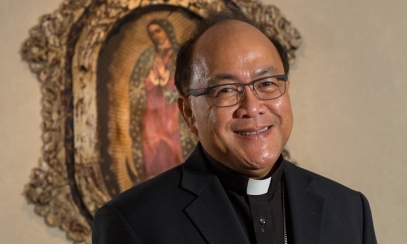
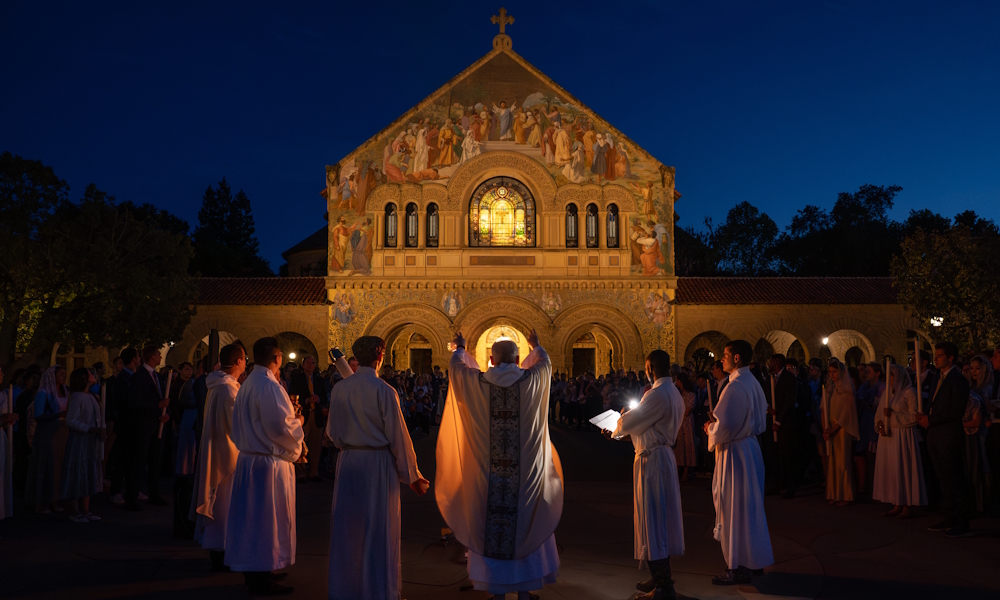
Father Bartholomew Hutcherson O.P., who has spent more than three decades serving young adults, encountered something extraordinary during last year’s Rite of Acceptance: it was the first public sign of the great number of Stanford students and alumni who were journeying toward the Church together.
Father Bartholomew Hutcherson O.P., who has spent more than three decades serving young adults, encountered something extraordinary during last year’s Rite of Acceptance: it was the first public sign of the great number of Stanford students and alumni who were journeying toward the Church together.
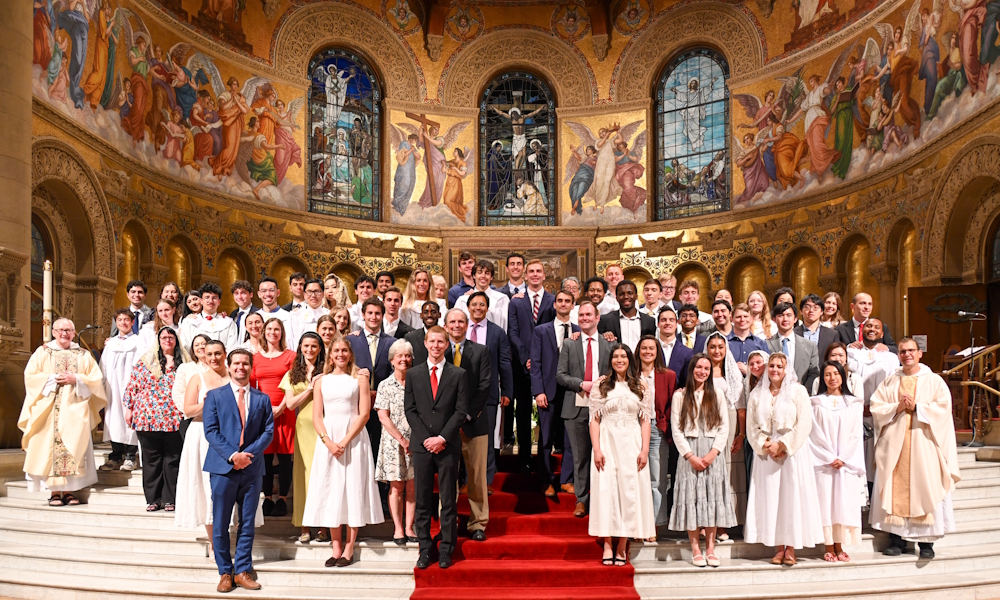
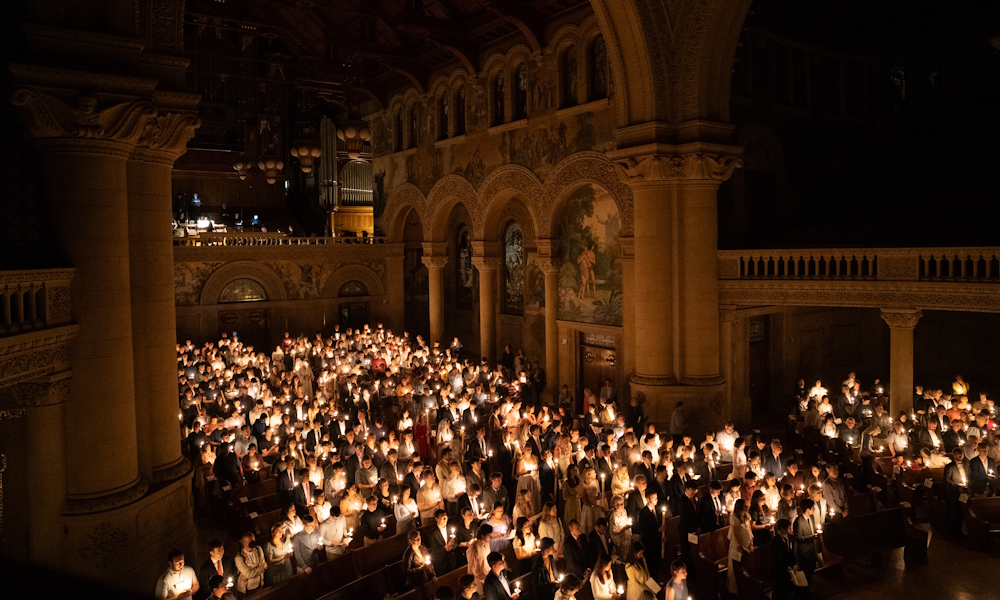
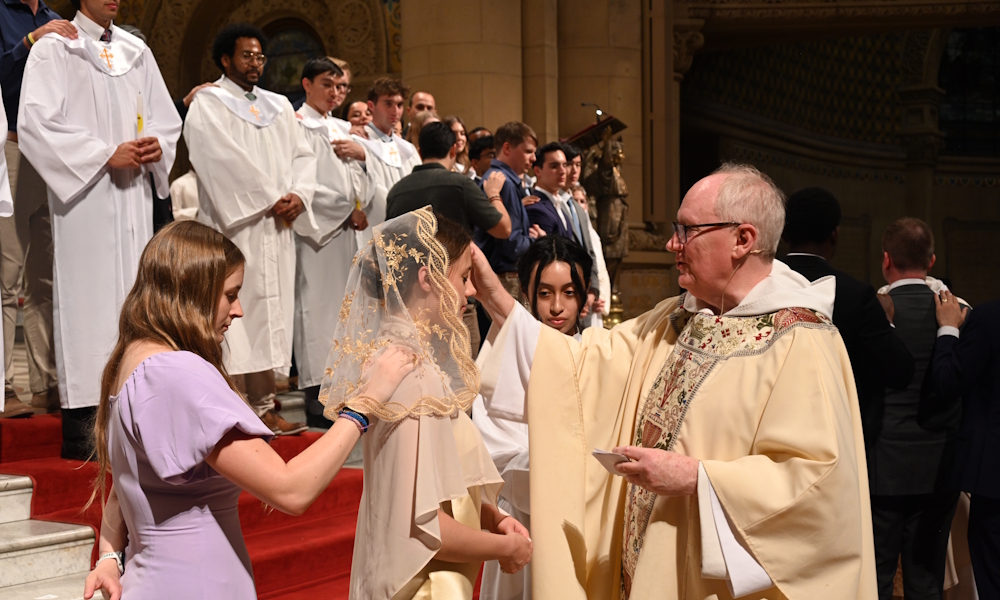
“It was almost overwhelming,” Father Bart recalled, as months of conversations, questions, and spiritual searching had begun to bear fruit. Between the Easter Vigil and Adult Confirmation, Stanford saw 46 students and young adults fully initiated into the Church this Easter. The previous year there were 14, and over the last 30 years they have averaged 4 adult baptisms. In 2026, 16 adults were baptized, 10 were received, and 20 Catholics were confirmed.
Beyond the record numbers, for both Father Bart and Oriana Li Halevy, Director of Adult Faith Formation, this influx of candidates and catechumens confirmed a deep conviction about the Order of Christian Initiation of Adults (OCIA) ministry.
Oriana, who went through Stanford’s OCIA program herself, explained, “Those seeking to be fully initiated into the faith need mentors and spiritual companions willing to take their questions seriously and walk patiently with them through every dimension of life.” This wisdom proved true in the journeys of Obi Nnorom Jr., Jacob Rivera, Quinn Healy, and Elizabeth Jerstad, who were all received into the Catholic Church at Easter Vigil.
Obi Nnorom Jr.:
“Catholicism most definitely crept up on me.”
Two years ago, Obi Nnoroum started questioning his beliefs. He began praying and reading the Bible, as well as arguments for God’s existence from various faith traditions. Occasionally, he came across Catholic YouTubers. Until then, he admits, “I had never thought or heard about Church history,” he shared. “I was completely unfamiliar with all the doctors, saints, and martyrs that were responsible for bringing the faith to me today.”
Raised as a non-denominational Protestant, he was initially shocked to discover that there was a formal process for becoming Catholic. Obi admits that even after joining OCIA, he was still very uncertain about entering the Church. “I felt like my intellect was farther ahead than my heart.”
Yet every weekly meeting with his new community strengthened his resolve to become Catholic. “I made some close friends through OCIA, and it made the entire experience that much better. It affirmed my decision to enter the Church.” Most of all, the year spent in OCIA formation gave his heart time to catch up with his mind. For Obi, “Catholicism most definitely crept up on me.”
Jacob Rivera:
“I needed to get to the bottom of what was actually true.”
When Jacob Rivera arrived at Stanford in 2022, the post-pandemic world seemed to be in upheaval. He remembered, “Every institution seemed to be making competing moral claims, and my classmates and professors held wildly divergent views on what was true, what was just, and what a human life was for. I needed to get to the bottom of what was actually true.”
He enrolled in philosophy and theology courses, and he read the early Church fathers. Very soon, however, Christianity ceased to be merely intellectual. It became an encounter with a God who entered fully into human experience. “That assurance is something no philosophy on its own could give me,” he reflected. “It required a God who became man.”
He also discovered his yearning for spiritual companionship. “I found that I needed the embodied Christian community,” he shared. His sponsor, Luke Smith, accompanied him throughout the process, and other OCIA participants’ stories deeply inspired him as well.
“Sitting with people who had wrestled with doubt, family resistance, and the simple difficulty of believing made my own reasoning feel less like a private achievement and more like one thread in something much larger.” Jacob said, “Hearing these stories week after week made the Church feel catholic [universal] in the literal sense, as something wider and stranger than I had expected, and exactly large enough to hold all of us.”
Quinn Healy:
“My value comes from Christ, not accomplishments.”
Quinn Healy, a Stanford student-athlete, began exploring Christianity as part of a greater search for authenticity. She shared, “There was always another goal to chase, and I started questioning where I was actually placing my identity and purpose.” She became increasingly drawn to Jesus, “Especially in the knowledge that my worth comes from being known and loved by Him, not just from performance or achievement.”
The Church’s teaching on the Real Presence of Jesus in the Eucharist helped everything ‘click into place’ for her. “For the first time,” she said, “I felt like I had found something lasting, not another accomplishment to chase, but a relationship with Christ that brought a deeper sense of peace, purpose, and fulfillment into my life.” OCIA also became the place where she could slow down, connect with others, and build a relationship with Jesus.
“By the end of the process, entering the Church felt very natural and certain to me.” Her parents were also baptized into the Catholic Church at the same time, at a different parish. For Quinn: “Getting to share that journey as a family was incredibly special.”
Elizabeth Jerstad:
“In place of apprehension, I felt God’s grace.”
At first, Elizabeth Jerstad was convinced that she would never become Catholic. Then she began attending Mass with her boyfriend and grew closer to members of the Stanford Catholic community. “Outside of Mass, I independently interrogated my deep-seated beliefs and realized that much of what I thought I knew about Catholicism was wrong. The beauty and reverence of the Catholic faith took hold of me, and I no longer wanted to dismiss it out of hand.”
As a Lutheran, she struggled with the doctrine of the Real Presence. OCIA became a safe place to ask questions. “What I experienced in OCIA proved my doubts wrong. In place of apprehension, I felt God’s grace helping to break down the barriers that had kept me from embracing the truths of the Faith.” She also remains grateful for those with whom she shared her OCIA journey. “Above all, hearing the testimonies of my cohort members was a true joy and continues to be a constant source of inspiration for me.”
Christ Embodied
Father Bart mused upon this year of record neophytes, “I have been like a proud father watching these young men and women make their way toward the sacraments of initiation. It gave me a greater awareness of the work of the Holy Spirit as I saw his gifts and fruits unfold in their lives.” As the newest members of the body of Christ, Elizabeth, Quinn, Jacob, and Obi remarked on their personal transformations.
“I would describe it as an evolution to a fuller understanding of Christ embodied,” Elizabeth said. “The Catholic teachings on the importance of the physical sacraments, especially the Holy Eucharist, deeply transformed my understanding of the relationship I could have with Jesus in this life.” Quinn shared how her perspective has shifted: “I’ve become much more aware that my value comes from who I am in Christ, not just what I accomplish.”
Obi has discovered new depths in his spiritual life through devotional practices such as meditation on the mysteries of the Rosary. “It has been these meditations and the prayers of the Church that have slowly led me deeper into my relationship with Christ.” For Jacob: “What has changed most is the comfort I find in knowing that my God knows my struggle. There is no corner of my own anxiety or weakness that He has not already entered into Himself. He knows me, and He loves me regardless.”
In this way, walking together, the Stanford neophytes have also become Christ embodied in community. Oriana confirmed this about the OCIA journey: “It is also about becoming a vibrant Catholic community in which we carry one another's burdens, joys, struggles, and hopes with love, and in which students themselves grow into active members of the Body of Christ who, in turn, begin serving and leading others.”
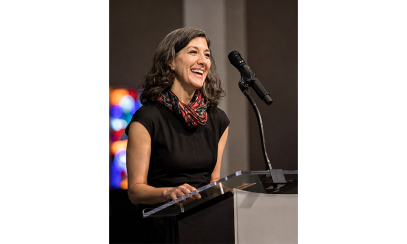
Marissa Nichols is the editor of The Valley Catholic magazine and a host for Invited: The Valley Catholic Podcast. She attends mass with her family at the Santa Clara Carmelite Monastery. She loves gardening, reading, and the outdoors.
Father Bart Hutcherson, OP, is a Dominican Friar who serves as Pastor of the Catholic Community at Stanford. In the last 40 years, he has worked variously in youth, young adult, and university ministries. He is a hobbyist photographer and loves capturing beauty with his camera.
Oriana Li Halevy’s background spans corporate law, international business consulting, tech investing, and translation. She serves in leadership roles with Harvard- and Silicon Valley–based organizations and has served at Catholic Community at Stanford since 2021 in liturgy, OCIA leadership, and mentoring.
Quinn Healy is a student at Stanford University studying International Relations and a member of the Stanford women’s water polo team. She also competes internationally with the U.S. Senior National Team and enjoys long walks, time with family, and exploring her faith.
Jacob Rivera is a graduating senior at Stanford University, who is pursuing a bachelor's degree in management science and engineering, a minor in ethics, and a certificate in Jewish Studies. Jacob enjoys spending time with family, reading classic literature, and playing beach volleyball.
Elizabeth Jerstad graduated from Stanford University in 2025 with a B.A. in International Relations, earning honors in Democracy, Development, and the Rule of Law. She works at OpenAI and is a parishioner at Saint Dominic Parish in San Francisco.
Obi Nnorom, Jr. is a PhD candidate in Computer Engineering at Stanford University, where he also earned an MS in Electrical Engineering. Originally from Cave Creek, Arizona, Obi is now an active member of the Catholic Community at Stanford.