Symbols of the Bishop
The Symbols a Bishop Wears and Why
Ordination day looks beautiful from the pews: the vestments, the music, prayers and the ritual. Look closer and you’ll notice a handful of simple things the Church places on a new bishop. They’re not props. They hint at how a bishop lives his ministry among us here in Santa Clara Valley.
Miter
The tall, two-peaked headdress is worn when a bishop presides and set aside for prayer in humility. The two “shields” and trailing fabric strips (lappets) are traditionally linked to the Old and New Testaments. A reminder that the bishop teaches with the light of God’s Word and the fire of the Holy Spirit. In the liturgy, the miter quietly signals responsibility under the Word he proclaims.
Crozier (pastoral staff)
Curved like a shepherd’s crook, the crozier proclaims vigilant care: seeking the lost, protecting the weak, guiding the flock and going after the one who’s missing. Presented at ordination, it signifies pastoral responsibility within a particular Church. For an auxiliary bishop, the crozier expresses shared shepherding in communion with the diocesan bishop of the people of the local Church.
Episcopal Ring
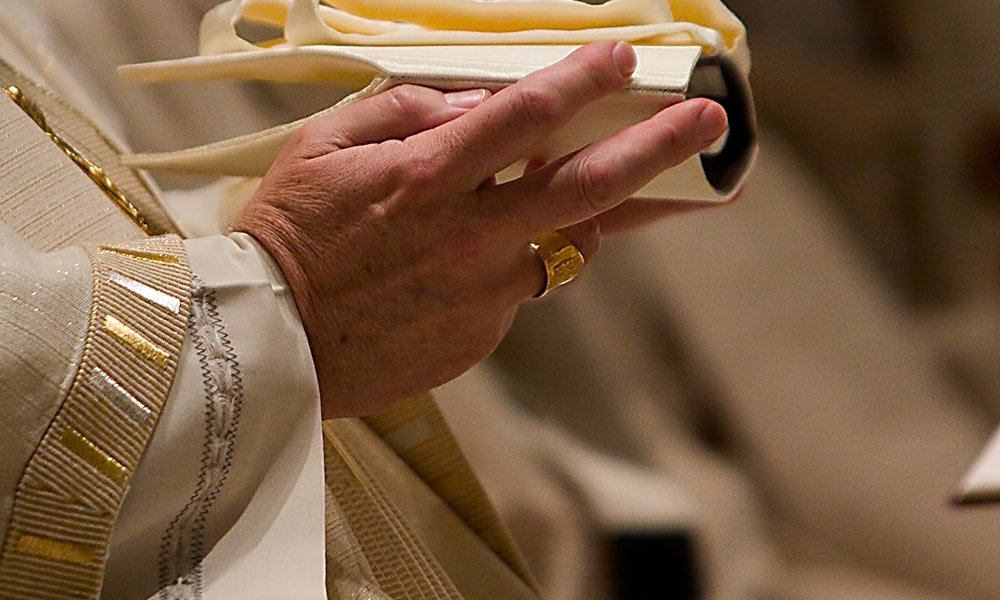
Given during the rite, the ring signifies a covenant bond with the local Church, enduring fidelity to the Gospel and a lifelong “yes” to the people entrusted to the bishop’s care. Like a wedding band, it points to steadfast love and responsibility to guard the Church’s faith. Many bishops wear the ring daily as a quiet, tangible promise kept.
Pectoral Cross
Worn close to the heart, the pectoral cross keeps the Paschal Mystery at the center of episcopal life. Traditionally suspended from a silk cord at liturgy (and a chain with clerical dress), some crosses include an amethyst long associated with bishops. The message is simple and demanding: leadership in the Church flows from the Cross, not from privilege.
Zucchetto (skullcap)
The purple zucchetto signifies episcopal consecration and communion with the college of bishops. It is removed at moments of solemn prayer, especially during the Eucharistic Prayer, to express reverence before the Lord’s presence. Color denotes rank in the Church’s family: white for the pope, red for cardinals, purple for bishops.
Put together, these five signs sketch a picture of a bishop: teacher under the Word, shepherd with others, faithful to his people, anchored at the Cross, prayerful before the Lord.