Rooted in Gratitude
The Nigerian Igbo Catholic Community Turns 20
The Nigerian Igbo Catholic Community Turns 20
For Father James Okafor, pastor of Saint Frances Cabrini since 2022 and chaplain to the Nigerian Igbo Catholic Community of San José (NICCSJ) since 2007, the story of the group's first two decades can be summed up in a single word: gratitude.
For Father James Okafor, pastor of Saint Frances Cabrini since 2022 and chaplain to the Nigerian Igbo Catholic Community of San José (NICCSJ) since 2007, the story of the group's first two decades can be summed up in a single word: gratitude.
“I am filled with gratitude to God,” he shared, “but also to the men and women God has used through the years to sustain the growth of the community.”
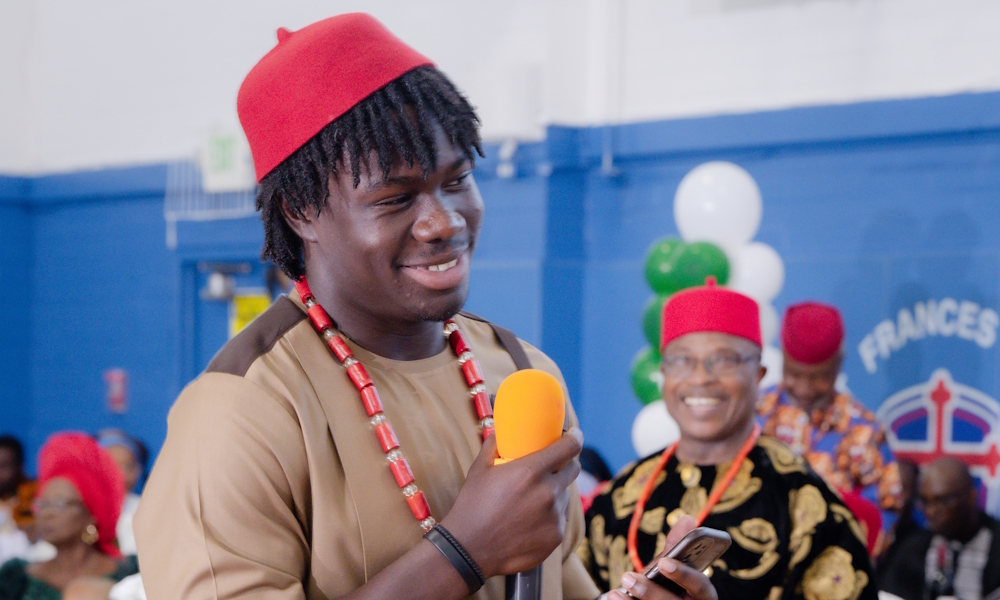
This same sentiment resonates in the experiences of its members, from its founders — Dr. Margaret Obilor, Chris Elias, and Celine Ogamba — to its young professionals such as Alex Okafor, who grew up immersed in its vibrant monthly liturgies and are now raising their children there. What began as the hope of a few Nigerian Catholics to celebrate their shared heritage has flourished into a uniquely cohesive Catholic community marked by deep faith, the Igbo language, and rich cultural expression.
Earliest Gatherings
More than 20 years ago, while attending Mass at Holy Family, Dr. Margaret Obilor noticed that a few other Nigerians sat in the pews. Deacon Sylvanus “Sunny” Offorjebe and Mrs. Molly Uzoh approached her and others. “They came over,” she recalled, “and talked about a Nigerian Igbo Catholic Community that existed in San Francisco.” For Margaret, who had just recently moved to the Bay Area from London, and was not very fluent in Igbo1 herself, this seemed like a wonderful opportunity to keep connected to her culture and the faith of her childhood.
It was not long before the Nigerian group began to meet more locally and found a spiritual home at Saint Francis of Assisi. The community remains grateful to the parish’s former pastor, the late Msgr. John Sandersfeld, whose early hospitality allowed the community to take root and thrive.
For founding member Celine Ogamba, becoming rooted at Saint Francis of Assisi was the necessary ‘first step’ to a greater journey. “A million miles begins with one step, and I am grateful that we are here today,” she reflected. Becoming a leader in her community, Margaret also shared, “has also taught me how to pray more deeply, how to ask God for mercy, forgiveness, and blessings.”
For Celine, a sense of stewardship for her community also means passing on her Nigerian heritage to the next generation. The Igbo language is a crucial part of this. She stated proudly, “Our children who are born here in the United States can now read and speak Igbo.” For her, this is crucial to their identities as Nigerian American Catholics, and Celine expressed her personal hope for a future community center where, “we can watch as they accept who they are in a foreign land and most importantly, learn about where they came from.”
Rooted in the Liturgy
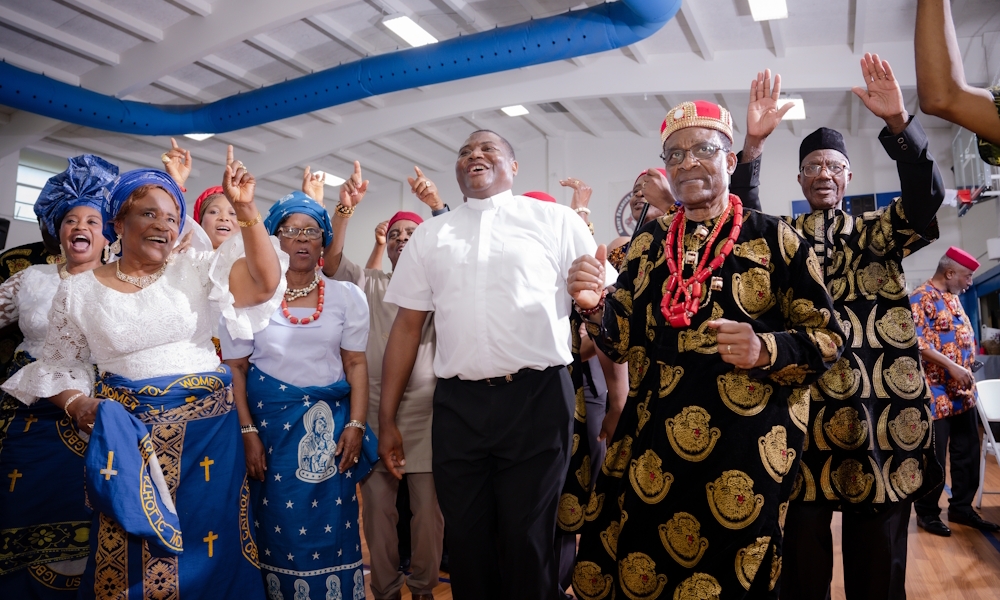
This intertwining of faith and cultural identity is one of the community’s strengths. Chris Elias spoke about the joy of worshiping together at the monthly Mass, currently offered at the Church of the Transfiguration in San José. He has witnessed how the Mass “strengthens our brotherhood and sisterhood, building inter-generational bonds between the old and the young alike.”
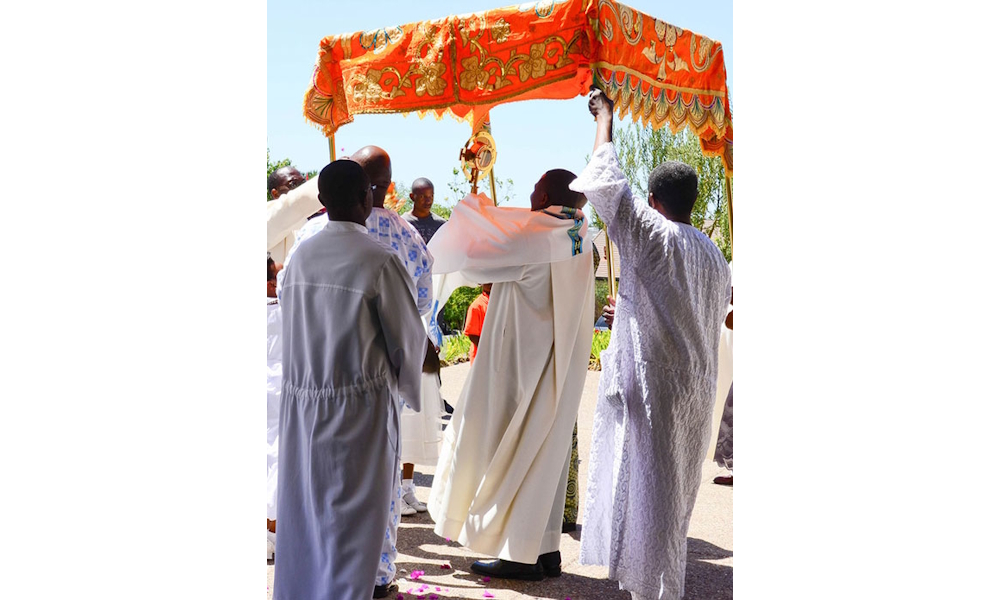
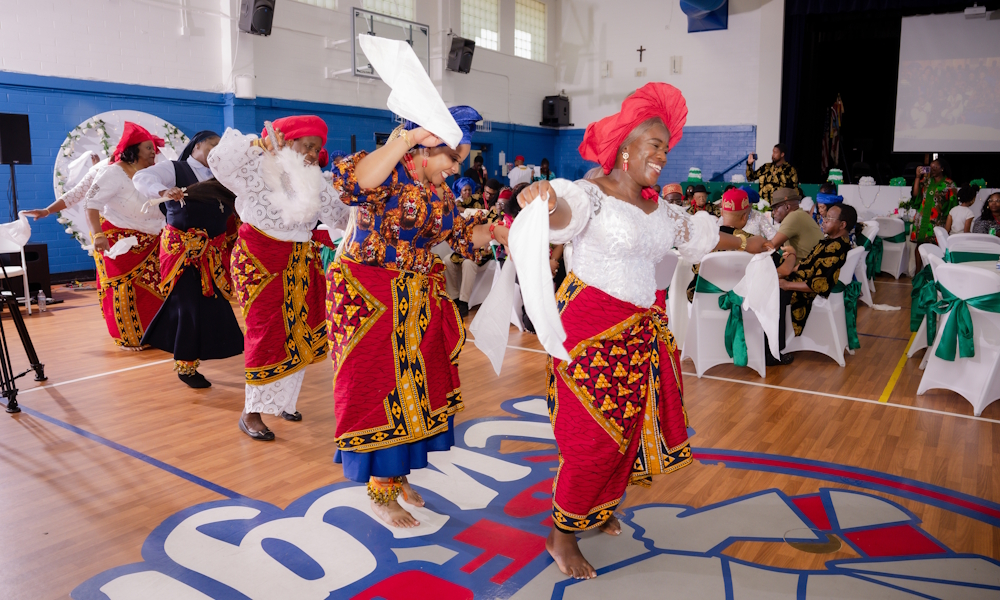
Nigerian liturgies differ in tone from American ones and are richly expressive of African culture. Music encourages participation and bodily swaying. The procession is often a lively event that includes drums and dancing. For Chris, “It is a vibrant expression of Catholicism that resonates deeply with me.”
Alex Okafor — no relation to Father James — an Archbishop Mitty alumnus, related his appreciation for how the Igbo community affirmed the fullness of his identity. “This community reinforces that there is a place for us,” he shared. “It reminds me that we are made in the image and likeness of God, each with a unique role to play.” Now Alex is raising his own children in the NICCSJ, and he is committed to its legacy. “Being part of this community has consistently reminded me that I have a unique and valued place in God’s kingdom, with all my differences, strengths, and heritage.”
Rooted in Prayer
Each evening at 8 p.m., families gather over Zoom for communal prayer. He shared how, “It is always inspirational to hear our children, the very ones we baptized in the community, leading the daily prayers.” Prayer translates into action across the three generations of Catholics who worship in the NICCSJ: into supporting and forming young leaders. This has been one of Father’s greatest joys: “Training young adults to step up as leaders ensures that the best of our leadership continues.”
As one of its founders, Margaret also attests to how, over the years, she has watched the children she raised in NICCSJ forge lifelong friendships and even surprise relatives in Nigeria with their growing ability to speak and read Igbo. “They built a network that continues today, even as they’ve moved across the country,” she said. “And they come back speaking Igbo in ways that astonish our family.”
As the community looks toward the future, gratitude permeates every next step: gratitude for faith, culture, for its leaders — past and present — and above all, to God’s guiding hand. Twenty years on, the Nigerian Igbo Catholic Community of San José stands as a living testament to unity, resilience, and the enduring power of shared faith. As Father James expressed of his community, simply and fully: “It has been a blessing being with them.”
1. Nigeria has dozens of dialects spoken across its many ethnic groups, and Igbo, one of its major languages, also has over 30 distinct dialects — some say even more — which all can vary significantly.
Father James Okafor is the Pastor of St. Frances Cabrini Church, San José, and Chaplain of the Nigerian Igbo Catholic Community of San José or NICCSJ.
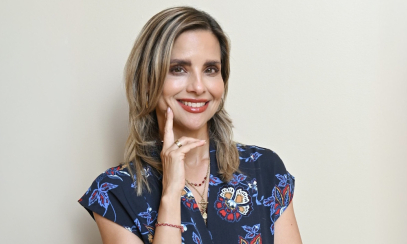
Doctor Margaret Obilor currently serves as the Behavioral Health Director at the County of Santa Clara Health and Hospital System in San José, California. She enjoys traveling, listening to music, dancing, and spending quality time with her family.
Lolo Celine Ogamba,graduated from San Jose State University with a degree in Criminal Justice. She is one of the founding members of the NICCSJ and that community’s first Catholic Woman Organization (CWO) leader, a position she has held for over 10 years.
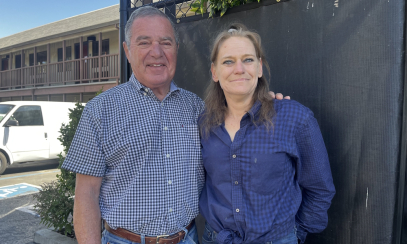
Chris Elias is a longtime Chair of the NICCSJ. He has held senior leadership positions across the public and private sectors and has served on several civic and nonprofit boards. He also currently serves as the Executive Director for the San Joaquin Area Flood Control Agency.
Alex Okafor is a proud husband to Rynae and father to three incredible children. He leads marketing for men’s fashion at Whatnot, a live shopping marketplace. He also attends St. Columba in Oakland and loves family time, good food, and a good book.