Community Immigration Advocates Share Their Perspectives and Experiences
Aditi Aggarwal-Gupta and Robert Yabes:
Catholic Charities of Santa Clara County
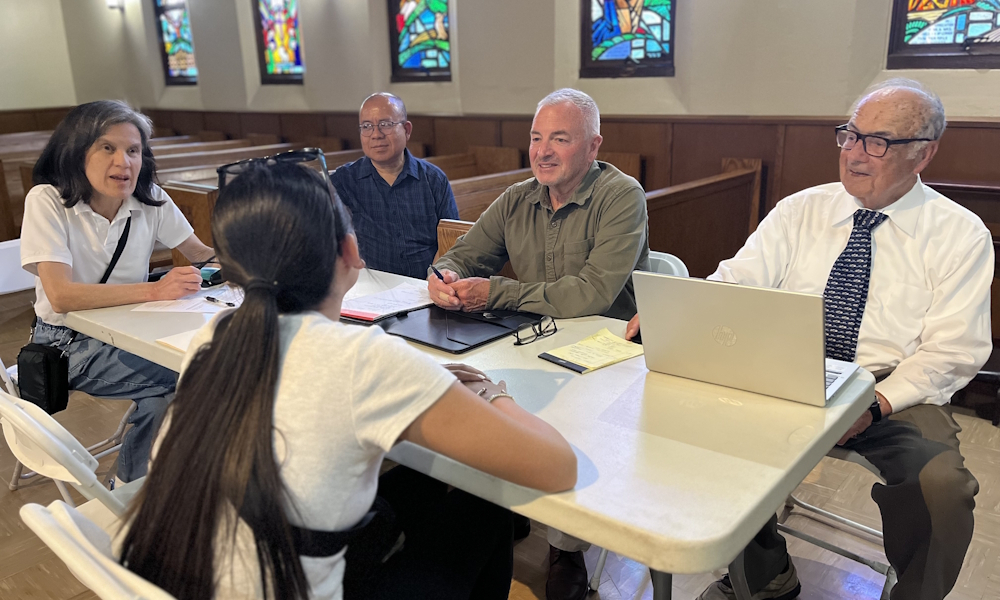
We are both Department of Justice accredited representatives, authorized to practice immigration law. This role was established by the government to protect low-income immigrants. We can represent people at the local immigration office. We continue to believe that every person deserves dignity, compassion, and hope, regardless of legal status.
Robert: Helping people access support and services is not just professional work for me. It is one of the ways I try, imperfectly but sincerely, to live out my faith each day, accompanying families through some of the most difficult and hopeful moments of their lives.
We see how recent immigration crackdowns have had a profound impact on both our organization and the communities we serve. People who may qualify for help are sometimes afraid to seek services because they worry about exposing themselves or their loved ones. Catholic Charities’ staff often work under difficult emotional, mental, and legal pressures as we try to protect clients while navigating evolving immigration policies and enforcement practices.
Our work focuses heavily on legal help, family reunification, stabilization, and community education. At the same time, we also support families through Know Your Rights education, family preparedness planning, and connections to broader social services.
Aditi: I am Hindu by birth and Catholic by passion through my work serving the community. The Catholic values of compassion, humility, dignity, and caring for those on the margins closely align with my own spiritual beliefs and values.
Diana Wilkerson-Graham and Anne McMahon,
Saint Clare and PACT (People Acting in Community Together)
As community advocates, these immigration crackdowns have truly impacted our organization. Resources and services are difficult to fund with so many immigrants being detained. Mental health issues (depression, anxiety, anger, loneliness, etc.) and needs have only increased.
The shocking actions of the immigration crackdown have mobilized our faith community to form an accompaniment ministry team to assist people impacted. Together, we are standing in solidarity and hope, working to support those affected by injustice.
Partners separated from each other, chaos around detention and deportation processes, cruelty of detention facilities, and dire lack of legal support — these are just some of the injustices that the crackdown has imposed. The limited availability of legal representation is a major barrier for those impacted and calls for more options for immigrants to access it.
Diana: As a Lector in my Parish, proclaiming the scriptures has only deepened my faith and understanding of the Gospel, which speaks of love of my neighbor, friends, family, those in need, and immigrants.
Anne: Since getting involved in the Catholic Charities Refugee Resettlement Program years ago, I have become attuned to the deep challenges and barriers that refugees, migrants, and immigrants face. Jesus's words and deeds are clear: we are to help those on the margins, the poor, the stranger, the widow, the orphan, and our accompaniment ministry team is trying to live out that Gospel call.
Mabel Aburto and Carolina Mireles-Sailor:
ConXión to Community
Our organization was on the news last year when ICE came and physically took somebody out of our facility. Our client was near the door, and they just walked and grabbed him. They were, we believe, looking specifically for him.
Immediately after that, many clients were afraid of coming in. They no longer felt it was a safe place. We installed our metal door at the front that the employees oversee and manage; we know our participants. That has helped.
All the services that we offer are for everybody. We offer employment; we help with housing. We offer laundry, youth programs, and parenting classes. When clients come here, they are just so grateful for the services we offer through all our programs at the Day Worker Center and beyond. Our census is finally getting back to where it used to be.
Caroline: When I serve the community, I serve Jesus.
Huy Tran
Siren Immigration Rights
We are seeing an undercurrent of fear that permeates immigrant communities, but also a resilience. Families who participated in our focus groups shared stories about how their children have developed anxiety for fear of a parent being taken when they leave the house. This is on top of prevailing concerns about housing and healthcare.
Early last year, we were inundated with requests for presentations to train people on their rights and to make sure that they knew how to handle engagements with ICE. Now we are also working to support those who have already been detained, which is in high demand.
For example, we took on the case of a couple from the Philippines who were detained at their final interview for their green card. They were separated and moved into different detention centers. This was one of those couples that had never spent a night apart since they were married. The wife was deported in under a week. The husband wanted to fight, but when we lost the bond hearing, he gave up. He was mistreated and abused at the California City detention center. They are now back in the Philippines, separated from their family, who are still here.
The Southeast Asian community is also being impacted. There are refugees from Vietnam who struggled to adjust when they first arrived in the US and made decisions that led to criminal convictions. Now, 10, 15, or 20 years later, they have grown up, had families, and become caretakers or the primary earners. Their old cases are being dredged up, and they are now being treated like criminals again and facing deportation.
Maritza Maldonado
Amigos De Guadalupe
At Amigos de Guadalupe, we have seen an increased need for trusted information, legal referrals, emergency planning, and emotional support. Families are seeking guidance on their rights and on how to protect themselves and their loved ones as they navigate a rapidly changing immigration landscape.
What has been most striking is the emotional toll these crackdowns have had on children. Many young people carry the stress and uncertainty their parents experienced, which can affect their sense of safety, emotional well-being, and ability to thrive.
Despite these challenges, we have also witnessed tremendous resilience. Families continue to support one another; neighbors continue to organize and fight against systemic inequities. Community-based organizations continue to serve as trusted anchors. Our role is to ensure that families know they are not alone, that they have access to resources and support, and that their dignity and humanity are respected regardless of their immigration status.
My parents came from Monterrey, Mexico, seeking a better future for their children. My faith has played a significant role in my entire journey. The Gospel calls us to stand with the marginalized, to accompany our neighbors, and to work for justice and human dignity. Those values have guided me throughout my life and continue to shape my work today.
Visiting a Detainee
Father Jon Pedigo, parochial vicar at Saint Lucy, Executive Director for PACT
The most important dimension of pastoral care is accompanying those in need: these are the basic corporal works of mercy, which include comforting the sick and dying, caring for the widow and orphan, welcoming a stranger, and liberating the captives.
During my visit to one of PACT’s own leaders, who is now detained in California City, I noticed the razor wire, the guards and guard towers, and the heavy security. When we went to visit our friend in the visitation room, we were separated by thick glass and had to communicate with a handheld telephone receiver that we shared between the three of us.
As we were ending our visit, we were going to offer a blessing, and instinctively, we raised our hands and touched the glass. Likewise, our friend did the same. I noticed that there were smudges all over the glass where people put their hands and even kissed the glass.
I asked our friend if she had an opportunity to receive the sacraments. She said she had not. She said she and several other women get together and pray the rosary at 8 o’clock every night. She asked if we would pray with her from wherever we are at 8 p.m.
As a Church, we need to advocate that detainees have access to the sacraments. We need to accompany them with prayers from our homes and our parishes and make it very explicit that our prayers are in solidarity with those who are behind bars. And lastly, we need to speak about this in public and from the pulpit. We need to advocate together for a different way forward. The immigration crisis we are facing now is due to a broken immigration system. We need to join with our bishops and advocate for long-overdue reforms.
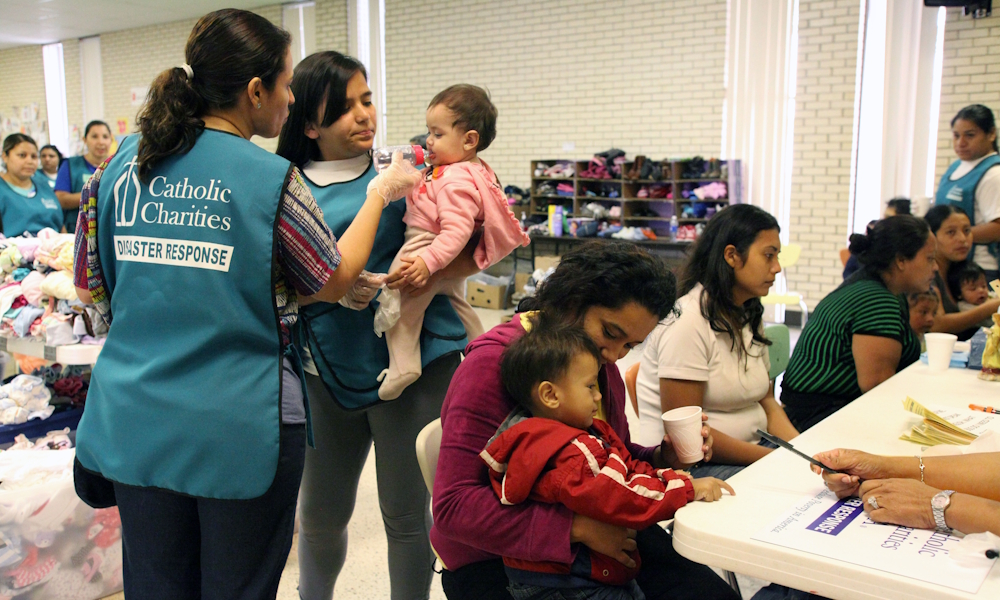



- Listing of free to low-cost non-profit organizations serving the local immigrant community and the immigration services they provide
- American Immigration Lawyer's Association (AILA), Attorney Referral Service)
- Migrants and Refugees Resources - Diocese of San José.